




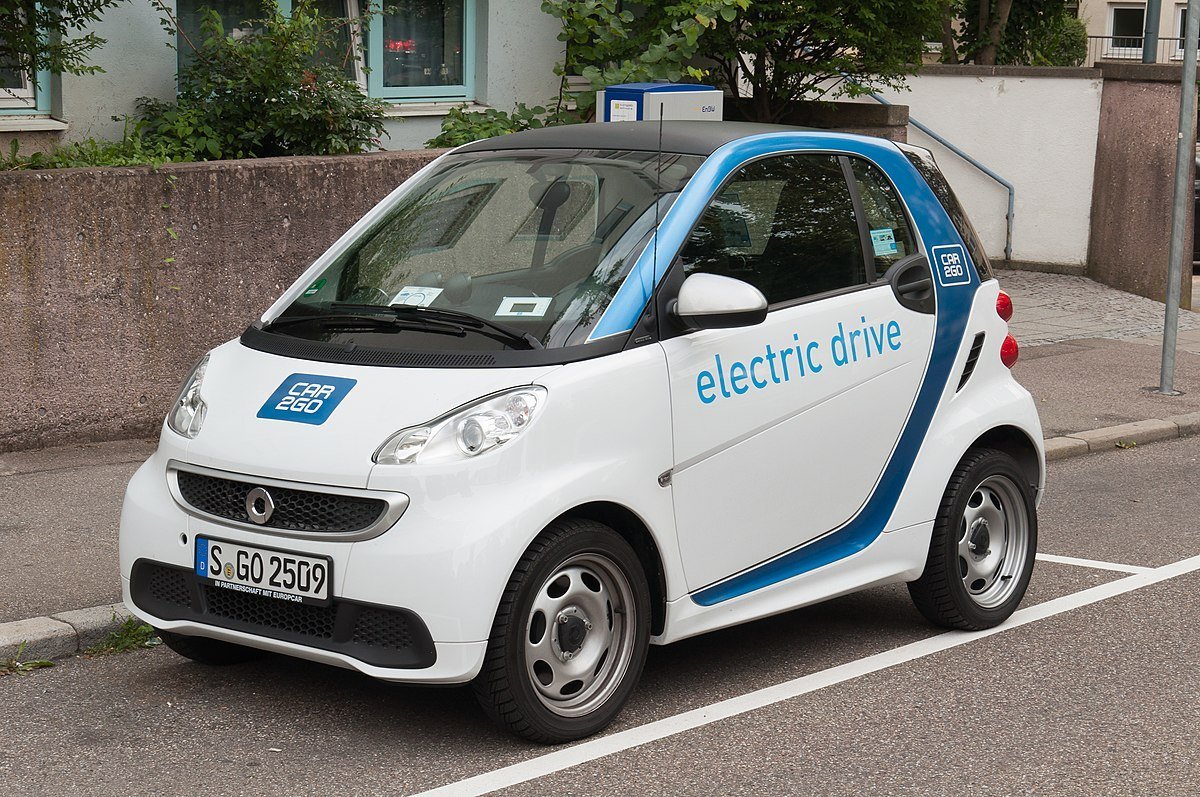
Following on from Chloë Davies’s article which wrote about the possible savings from an electric car due to its using electricity instead of fossil fuels, it’s worthwhile flagging up the other savings (and the odd extra cost) due to replacing a fuel car with an electric one.
Electric vehicles are simpler
Most of these savings are due to electric vehicles having many fewer moving parts than fuel cars and not generating lots of waste heat to be dissipated. There is no oil to be changed, no air and oil filters, no gear box, little water circulation (batteries still do need to be cooled), none of that interesting assemblage of belts, cams, valves and injectors that gets fuel into an internal combustion engine and exhaust gases out. Electric motors have a single central shaft and that’s it.
Of course, both sorts of vehicle have brakes, suspension, wheels and tyres, all of which require maintenance. Most regular service plans for electric cars focus on ensuring the battery and electric drive-train work as intended. The charging cable is checked for damage and performance, while the battery is checked for charge level to detect performance deterioration. The high-voltage systems and cables are checked, with parts replaced if necessary.
Cost comparison
So what does it cost and what are the savings? The absolute direct comparisons available are slightly limited as there have been only 3 mainstream cars available in all of EV, petrol and diesel format. These were the Ford Focus, VW Golf and Mercedes B Class. Back in 2018, HPI estimated the following costs for these:
| 3 years’ servicing costs | Ford Focus | VW Golf | Mercedes B Class | ||||||
| Cost | EV Saving | Cost | EV Saving | Cost | EV Saving | ||||
| £ | £ | % | £ | £ | % | £ | £ | % | |
| Service & maintenance (brakes / tyres etc) | |||||||||
| EV | 1222 | 1125 | 1567 | ||||||
| Petrol | 1612 | 390 | 24.2 | 1334 | 209 | 15.7 | 2045 | 478 | 23.4 |
| Diesel | 1763 | 541 | 30.7 | 1392 | 267 | 19.2 | 1966 | 399 | 20.3 |
| Service only | |||||||||
| EV | 243 | 231 | 368 | ||||||
| Petrol | 581 | 338 | 58.2 | 488 | 257 | 52.7 | 892 | 524 | 58.7 |
| Diesel | 729 | 486 | 66.7 | 488 | 257 | 52.7 | 827 | 459 | 55.5 |
Three years have passed and these cars are out of date – the Focus and Mercedes are no longer available – but we can look at the available Service and Maintenance Plans for cars which are of similar size in various manufacturers’ ranges. These are very useful in that they reflect the cash you will actually have to fork out.
| Manufacturer/model | Length of plan | Cost (£) | Saving(£) | |
| Audi | ||||
| e-tron, e-tron Sportback (EV) | Two years/variable miles | 399 | ||
| Q5, Q7, Q8, petrol & diesel | Two years/variable miles | 629 | 230 | 36.6% |
| BMW | ||||
| i3 (EV) | Three years/variable miles | 540 | ||
| 1 Series, petrol and diesel | Three years/variable miles | 720 | 180 | 25.0% |
| Kia | ||||
| Soul EV | Two years/20,000 miles | 239 | ||
| Stonic petrol | Two years/20,000 miles | 329 | 90 | 27.4% |
| Nissan | ||||
| Leaf EV | Two years/36,000 miles | 368 | ||
| Qashqai, petrol | Two years/36,000 miles | 538 | 170 | 31.6% |
| Diesel | Two years/36000 miles | 638 | 270 | 42.3% |
| Renault | ||||
| Zoe EV | Three years/30,000 miles | 299 | ||
| Clio, petrol and diesel | Three years/30,000 miles | 499 | 200 | 40.1% |
Both of these tables mean that on top of the £155 saved in road taxes, perhaps £850 saved in fuel you don’t have to buy, you would save between £100 and £250 in servicing.
It is also possible that EVs may come with savings on tyres and brake pads, because EVs use regenerative braking – using the electric motor “in reverse”, thereby recharging the batteries – which reduces the use of the actual brakes and is less hard upon the tyres. This is very difficult to quantify as it’s as much about the way people drive and is balanced by the greater weight of equivalent EVs, which causes greater wear on tyres.
Electric vehicle insurance
At the top of this piece, I said that there was the odd extra cost, which is not really so surprising, in that EVs are more expensive to insure. AutoExpress found that a diesel Hyundai Kona cost £612 pa compared to £648 for the Kona EV. This reflects the higher purchase cost of the EV and its higher repair costs which are due to there being insufficient technicians in the UK trained to do the work.


